A jazzy night in Paris from Denève, Dallas Symphony
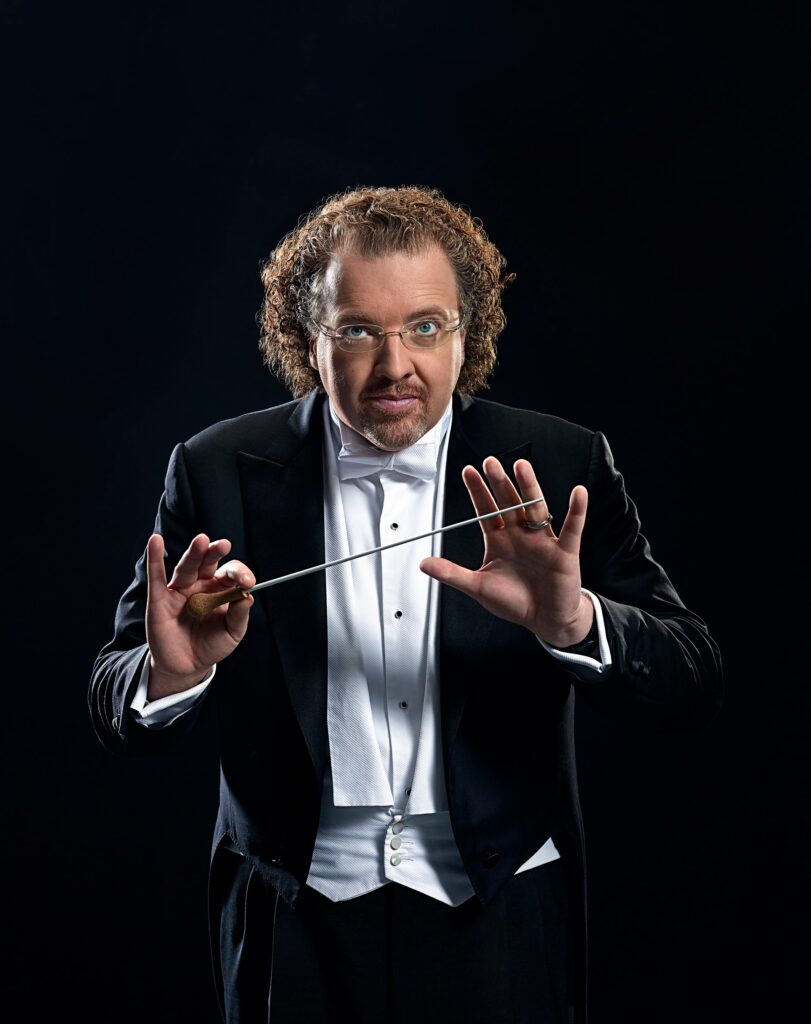
Stéphane Denève led the Dallas Symphony Orchestra Thursday in a scintillating concert consisting of works from the Jazz Age in France.
Ravel’s splendid Concerto in D Major for Piano Left Hand with Cédric Tiberghien as soloist was the focal point of a program that included Darius Milhaud’s jazz-inspired ballet La Création du monde, Albert Roussel’s impressionistic Suite No. 2 from Bacchus et Ariane and George Gershwin’s An American in Paris.
First up was Roussel’s Bacchus et Ariane, which depicts the meeting and wedding of the two figures in a series of contrasting dances culminating in a bacchanale. Principal violist Meredith Kufchak and co-concertmaster Nathan Olson led off the first dance with mysterious arabesques that were quickly answered by each of the principal winds. Lush strings quickly gave way to comically grotesque outbursts from the orchestra led by Gregory Raden’s clarinet signaling the appearance of Bacchus. Denève deftly guided the orchestra through the alternately playful, pastoral and sumptuous dance episodes to the brash finale with its Stravinskyan rhythms, strident brass glissandi. raucous cymbals and tam-tam that marked the suite’s delightfully unruly conclusion.
Ravel’s dazzling piano concerto was composed for the pianist Paul Wittgenstein, who lost his right arm during World War I. Cédric Tiberghien captivated the audience with his astounding performance. Following a foreboding opening from the low strings and contrabassoon that blossomed into a rich, dirge-like sonority as the rest of the orchestra joined in, Tiberghien echoed the orchestra’s introduction on the piano, building an initial rumble in the instrument’s low register to thundering arpeggios punctuated by higher-pitched chords resulting in a kaleidoscopic texture. Sounding for the most part in this middle range, Tiberghien’s part benefited greatly from the rich, resonant tone of his instrument, and his articulation of discrete lines within the piano’s texture.
Denève’s commencement of the concerto’s march section abruptly shifted the piece’s character from contemplative to relentless and even bellicose as Tiberghien and the orchestra traded angular and aggressive melodic fragments over an unremitting rhythm that resembled a martial parody of The Sorcerer’s Apprentice. Indeed, the frightening nature of the section inevitably brought to mind the Great War that had preceded France’s Années folles and resulted in the circumstances leading to the concerto’s conception and composition. The sudden collapse of the march brought a return to the mood of the opening which swiftly made way for the understated yet striking cadenza, during which Tiberghien, using only his left hand, executed a stirring, lyric duet between voices sounding above and below a gently rippling ostinato.
The program resumed after intermission with Milhaud’s La Création du monde, a ballet setting of an African creation myth in five dances mixing blues sonorities with the snappy rhythms of ragtime and the cakewalk. For this piece, the instrumentation was drastically reduced, consisting essentially of the principals from the wind, brass and string sections plus piano and percussion, forming a facsimile of a Dixieland band. Here, Denève let loose his full enthusiasm for the jazz-inflected French music of the Twenties, setting an introspective mood with a static meditation on a blues harmony before cuing the double bass and trombone to launch into a New Orleans-style jazz fugue that was taken up by each of the other players.
The DSO capped the evening’s performance with the Gershwin favorite, An American in Paris, the composer’s third excursion into symphonic jazz. Denève opened the piece with a moderate tempo, bustling but not hectic, evoking the busy urban atmosphere of Paris with the music’s incessant clipped rhythms and the literal sounds of taxi horns.
For the contrasting slower section, Denève encouraged the orchestra to lean into the bluesy rhythmic accompaniment, allowing principal trumpet Stuart Stephenson to step forward and give full reign to the jazzy feel behind the work’s familiar principal melody
Denève brought back the lively opening tempo for the subsequent portion based on a Charleston rhythm, using this as a springboard for increasingly grand and exuberant statements of the nostalgic main theme that closed the piece and the evening with a joie de vivre not unlike that embodied in the carefree spirit of the Roaring Twenties celebrated by the evening’s program.
The program will be repeated 7:30 pm Friday. dallassymphony.org
Leave a Comment