Daniel Hawkins shines in Strauss with Luisi, Dallas Symphony
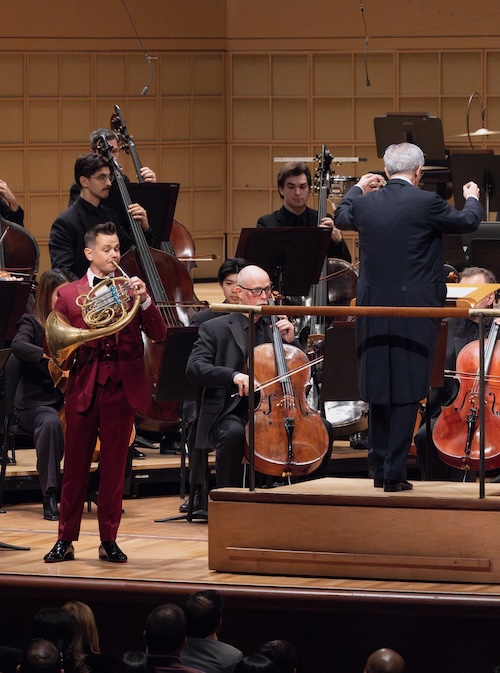
Principal horn Daniel Hawkins joined music director Fabio Luisi and the Dallas Symphony Orchestra for a concert of riveting Beethoven and graceful Richard Strauss Friday night.
Strauss’s Horn Concerto No. 2 is often described as nostalgic because it evokes similar works by Haydn or Mozart, is not overtly flamboyant, but instead more pastoral in character. This comparatively calm surface belies subtle yet abrupt harmonic shifts and sinuous melodies that demand skill and responsiveness from the player.
Hawkins negotiated these effortlessly, demonstrating a keen agility in the fast passages and maintaining a clear, round tone throughout that blended smoothly with the rest of the orchestra.
In the Andante con moto, the principal winds introduced a lyrical melody that Hawkins took up as part of a tender dialogue. Hawkins led off the finale with a rapid-fire theme that became the basis of a playful rondo, leading Luisi and the DSO on a merry chase that culminated with a rollicking statement of the finale’s theme from the entire group.
For an encore, Hawkins performed Randall Faust’s Call and Response: Variations on “Amazing Grace” for Solo Horn, explaining that the source hymne was a favorite of his mother, who was present in the audience. Although brief, the piece was remarkable for the range of moods encompassed within its overall introspective atmosphere.
During the second half of the evening’s program, Luisi took the inherent rhythmic drive of Beethoven’s Seventh Symphony as an opportunity to put the DSO through its paces. His tempo for the first movement seemed a bit quicker than is often heard, but this did not detract from the majesty of the introduction, and actually imbued the movement’s galloping principal theme with added verve.
The alacrity of the first movement carried over into the Allegretto; the first movement had scarcely concluded before Luisi signaled for the somber opening chord and relentless variations of the second, which were also taken at a slightly accelerated pace.
“Presto” proved an apt designation for the scherzo, which Luisi propelled forward, allowing respite from the unrelenting motion only during the trios The fleet tempo of the finale added a new layer of excitement to the movement as it careened forward with the momentum of a rollercoaster. Despite the almost headlong pace, the DSO maintained crisp articulation and executed the finale’s themes with clipped precision as they met Luisi’s challenge and brought the symphony and the evening to a jubilant conclusion.
The concert opened with another “mystery piece” in Luisi’s series, launched last season, in which unnamed piece is performed and then revealed after intermission.
[Spoiler Alert. Stop here if you’re attending DSO concerts this weekend and would rather guess.]
Tentative string flourishes opened, followed by a yearning oboe melody that was echoed by the violins. Under Luisi’s direction, the music grew louder and more agitated as more instruments joined the fray, leading to a percussive crash that spurred a sweeping rendition of the oboe’s earlier melody from strings and brass. That gradually subsided to a softer iteration from the violins, accompanied by harp and horns, before closing with a hushed statement from concertmaster Alexander Kerr over a delicate bed of shimmering strings. The piece was revealed to be the Adagio from Aram Khachaturian’s 1954 ballet Spartacus.
The program will be repeated 7:30 p.m. Saturday and 2 p.m. Sunday. dallassymphony.org
Leave a Comment