Luisi, DSO close season with an epic and resounding Mahler Eighth
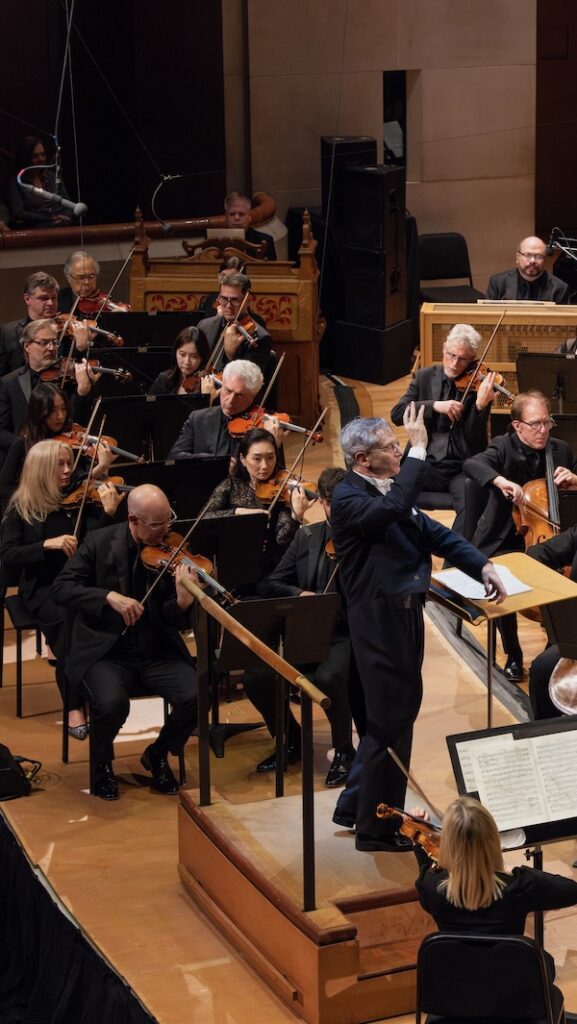
Fabio Luisi and the Dallas Symphony Orchestra concluded their season Friday with an exhilarating performance of Mahler’s Symphony No. 8. Bolstered by an ensemble of outstanding vocal soloists, the Dallas Symphony Chorus and the Dallas Symphony Children’s Chorus, the DSO’s resplendent rendition of Mahler’s epic complemented Luisi’s DSO performances of Mahler’s Fourth Symphony last October and Mahler’s Second Symphony last May.
Like the composer’s Second Symphony, Mahler’s Eighth is focused on the idea of spiritual redemption, which it conveys through the inclusion of voices. Unlike the Second Symphony, the Eighth is sung throughout its two parts; the first sets the hymn Veni creator spiritus, while the extended second part sets the final scene of Part II of Goethe’s Faust, depicting the title character’s ultimate salvation in the manner of an oratorio. The symphony answers a plea for redemption with an account of the deliverance of one who appeared beyond redemption.
From the massive opening organ chord, the symphony’s first part ardently expressed jubilation and longing stemming from the hymn’s appeal to heaven. The hymn verses were taken alternately by the full choruses or the ensemble of soloists, all while buoyed by the DSO. Dynamic fugal interludes from the orchestra provided the voices with a few moments of respite, but the first part remained grand and exuberant during its entirety.
The second part showed a greater variety of moods reflecting the narrative and setting of the conclusion of Faust. Whereas the soloists served largely as another choir during the symphony’s first part, their assumption of individual roles within the drama allowed each of the solo vocalists to step to the fore.
As the penitent Gretchen, Meghan Kasanders’s clear, full soprano conveyed the full measure of Gretchen’s forgiveness of Faust, allowing for his redemption. Rachel Willis Sørensen’s powerful soprano brought an equal sense of elation to the Magna Peccatrix following the kindness shown her by Jesus.
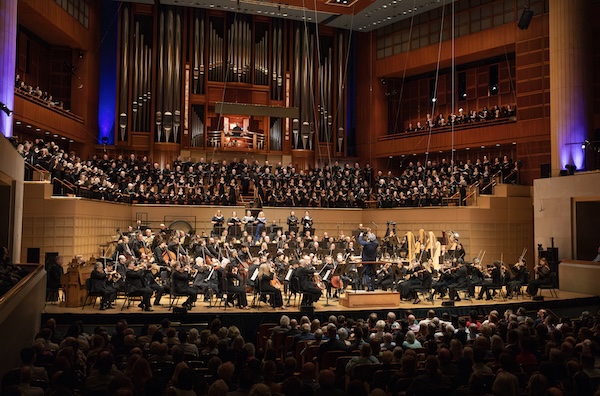
Singing from an upper balcony in the Meyerson Symphony Center, Deanna Breiwick’s exultant soprano voice portraying Mater Gloriosa appeared to issue from the ether as she exhorted Faust’s soul to enter heaven.
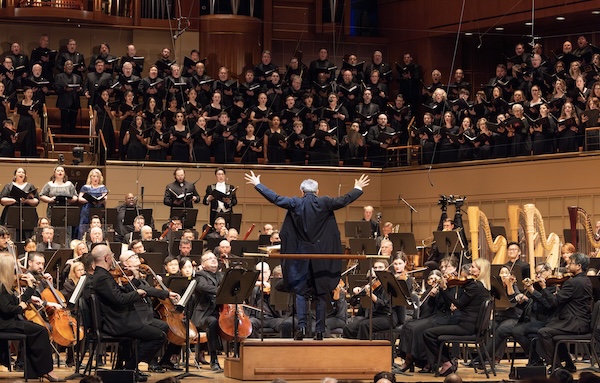
Oleya Petrova marshalled her strong mezzo-soprano as the Mulier Samaritana, singing of the overflowing spring which had saved her and would save Faust. Similarly, Renée Tatum’s rich mezzo-soprano captured the joy expressed by the saint Maria Aegyptica that Faust will share her fate.
Luke Sutliff’s rich baritone perfectly depicted the ecstatic yearning for redemption of Pater Ecstaticus that set the context for Faust’s own salvation. Likewise, Insung Sim’s robust bass voice portrayed the hopefulness amid despair expressed by Pater Profundus at the possibility of deliverance.
With his clear, ringing tenor providing the voice of Doctor Marianus, Limmie Pulliam bade all present to behold the arrival of Mater Gloriosa and to appeal to her for compassion.
The Dallas Symphony Chorus sounded marvelous, permeating the Meyerson Center with angelic choirs, holy anchorites, the otherworldly Chorus Mysticus, or simply the sound of multitudes. The Dallas Symphony Children’s Chorus excelled as well, adding an aura of innocence to their renditions of the angelic choirs in the second part.
The Dallas Symphony Orchestra itself, augmented by additional brass, harps, harmonium and mandolin as well as organ, not only provided a firm foundation for the voices, but also delivered distinctly memorable moments of its own. The DSO’s fugal interludes in the first part carried all the splendor of Bach cantatas.
The picturesque settings of the second part were rendered with particular vividness; the dark mountains and forests of the scene’s beginning were effectively suggested by the shadowy and mysterious prelude, while the quiet moments before the final cadence evoked the image of heaven prepared to accept Faust’s soul with its sounds of high winds and cascading harps. The final cadence itself, with its resounding Wagnerian brass and strings, fulfilled all the promise of majesty and brilliance offered from the symphony’s outset.
At the center of this activity, both figuratively and literally, was Fabio Luisi. The focus of attention for the orchestra, the voices and the audience, he prompted instrumental flourishes with his bold gestures, indicated dynamics with subtle body movements, controlled tempos with crisp direction and inspired levels of feeling with his facial expressions. Luisi, as always, sculpted the sounds of the DSO from the podium and led the audience into and through Mahler’s symphonic choral masterwork.
The program will be repeated 7:30 p.m. Saturday and 2 p.m. Sunday. dallassymphony.org
One Response to “Luisi, DSO close season with an epic and resounding Mahler Eighth”
Leave a Comment

Posted May 18, 2026 at 1:40 pm by Carol Soph
Maestro Luisi gave a short but heartfelt speech thanking the audience for supporting the orchestra for 125 years. He stated that technology could never replace the experience of listening of listening and watching a performance of music live.