Gardner leads the Dallas Symphony in vibrant English-Scottish program
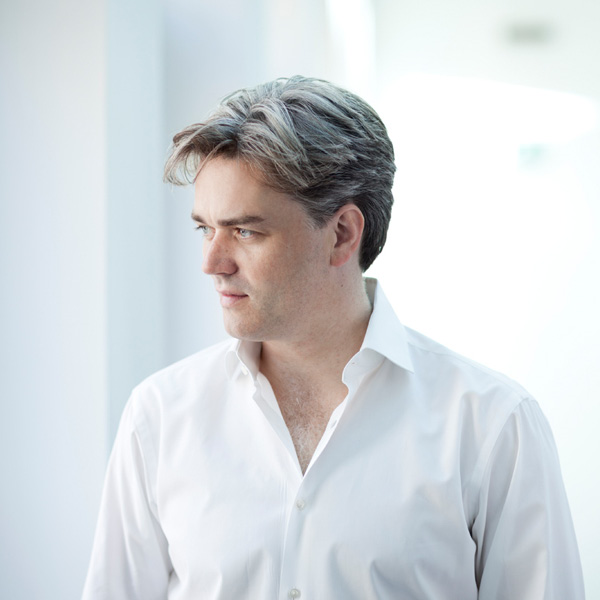
Guest conductor Edward Gardner led the Dallas Symphony Orchestra in a savory performance of British works that highlighted the orchestra’s wide palette of instrumental and vocal colors. The concert included yet another new work, along with a pair of audience favorites.
William Walton completed his Te Deum, a.k.a. Coronation Te Deum, in 1953 for the crowning ceremony of Elizabeth II. The original scoring called for full orchestra, organ, and large chorus divisible in several ways. Thursday night’s performance relied on Christopher Palmer’s arrangement of the work, which reduces instrumental forces to brass, harp, and percussion and retains the organ.
The 140-member DSO Chorus’s multihued blend brought out the various layers of ranges and texts. Diction was not always precise but the music didn’t suffer. Walton’s solemn style alternated with brighter approaches, often punctuated by the instruments, who themselves enjoyed several purely instrumental interludes. Overall the piece started big, shifted often in texture and stye, then ended quietly.
James MacMillan’s Where the Lugar Meets the Glaisnock marked a striking timbral change to solo euphonium and strings. David Childs, who commissioned the single-movement piece and is also its dedicatee, was the soloist in this U.S. premiere.
The piece opened with the warm, open sound of the rarely heard solo euphonium, best described as an alto or tenor tuba. Eventually six solo strings eased in, followed by the full, lush ensemble as the piece slowly built. The soloist’s winding, twisting motives migrated to strings, leading to an effective breathy middle section in full unison. The quasi-concerto embraces modern idioms but is never overly harsh.
Childs’s articulate tone was crystal clear throughout his range. The solo part is poignantly evocative of the composer’s grandfather, a coal miner and amateur euphonium player, and of the small Scottish town where the two rivers in the title meet.
Composer and soloist made excellent use of silence, allowing for compelling resonances in the Meyerson Symphony Center’s vast space. A lengthy lyrical solo developed over a simmering string background that slowly climbed from basses and cellos to upper violin registers.
Near the end, a brief violin solo by concertmaster Nathan Olson initiated a short duet with euphonium, before spiky strings with intermittent pizzicato and lightning-fast passages in the solo part brought the work to a close.
Gustav Holst’s The Planets, a suite of seven movements, is the best English example from among several great early 20th-century “textbooks” on orchestration. Here as elsewhere, Gardner was economical with his gestures, reserving large movements for appropriately forceful moments in the music.
The famous opening of “Mars” was crisp yet slightly understated, leaving room for the later dramatic buildup. Especially brilliant were the trumpets and trombones, along with percussion and flutes with piccolo.
“Venus” opened with Daniel Hawkins’s full-bodied horn solo, cushioned by suave flutes and oboes. These and other woodwinds created gentle pulses that complimented tender solos for violin, oboe, and cello. Punctuation was provided by two harps and Anastasia Markina’s exquisitely smooth celesta.
Fleet-footed lines in upper woodwinds, celesta, and strings dominated “Mercury,” where Tchaikovsky’s scoring influence was clearest. A middle passage with lilting strings suggested dances, and sinewy bassoons and contrabassoon helped stitch the various musical ideas together.
Regal trumpets dominated the opening of “Jupiter,” augmented by horns and trombones. The strings were strident and brash for several of the movement’s central hymnlike themes. Colorful percussion, including glockenspiel and tambourine, helped propel the triumphant tempo.
In “Saturn,” harp, flutes, and later reeds in their warmest low registers gave a clear and expressive background first to the ominous opening theme in the double basses, which was developed and passed to oboe, cellos, and horn. Basses then changed roles to provide a steadily paced pizzicato walking line under rich themes in the brass before enjoying a brief lyrical melody to themselves. Bells also stood out, enriching a fiery middle section.
Low pedal tones from the Lay Family Concert Organ, built by C.B. Fisk, widened and reinforced the movement’s sonorous ending, performed by DSO organist Bradley Hunter Welch.
“Uranus” is another nimble dance-like piece, greatly aided by a variety of percussion including xylophone. Bassoons set the pace, followed by upward expansion of the remaining reed instruments and finally bouncing bows. The movement featured Dallas’s full and robust brass, led by horns and Stuart Stephenson’s trumpet solo.
In “Neptune,” the somber yet colorful closing movement, Garner subtly guided the rise and fall of sweetly undulating flutes and rippling harps. Violins and celesta joined the wave-like ripples, all superbly balanced by the conductor.
The ethereal women’s choirs, unseen in an upper balcony, provided wordless vocalise, accompanied by harps and woodwinds, then joined by shimmering first violins for the piece’s final subsiding breaths.
Saturday’s repeat of the program has been canceled due to the impending winter storm.
Leave a Comment